Perfect Words #1: Arete [ἀρετή]

One of the reasons I love writing is that I get a real kick out of finding the “perfect word”: when you discuss a concept and someone sums it up into one word, with the right level of strength, even the right sounds that fit its meaning like “furious” or “awe”.

Sometimes these moments can capture meaning, like a photographer snatching a fleeting moment: how the light landed, how it made them feel.

Sometimes they can instead create meaning: when someone frames a concept for you with a new word, be it made up, borrowed from an other language, or simply unexpected.

There was such a moment earlier this week, as photographer Chris Mann and myself were discussing art over coffee, and I got to dust off the ancient Greek concept of Arete from my student years.

Specifically, we were debating the risks and rewards of dedicating time to art. The risk being financial, the reward being Arete.

‘Arete’ is a perfect word because it blends and elevates competence and gift. Its initial meaning is the “fulfilment of purpose or function”, for example a good, sharp knife fulfilling its cutting function, a pianist who took their gift and honed it with practice to become the best pianist they can be, or simply for any of us to “live well or excellently the life that we have“.

What is funny is that I had forgotten about that word but since that conversation I see Arete everywhere.

Yesterday I was taken aside by the swimming coach, as my son was not listening. I already covered in Desapego (another perfect word!) the specific agony of taking your neurodiverse kids to sports activities so will cut directly here to what happened next: instead of complaining, she asked me for tips to get his attention, went back to him and from then on he was focused and dedicated.

It was great to see him do his best but what moved me as I observed the rest of the lesson was to watch the coach work: how she showed the movements to the kids, how she stretched them and rewarded them. It was Arete: she was clearly doing what she was meant to do, with a gift perhaps, supplemented by experience, competence, excellence.

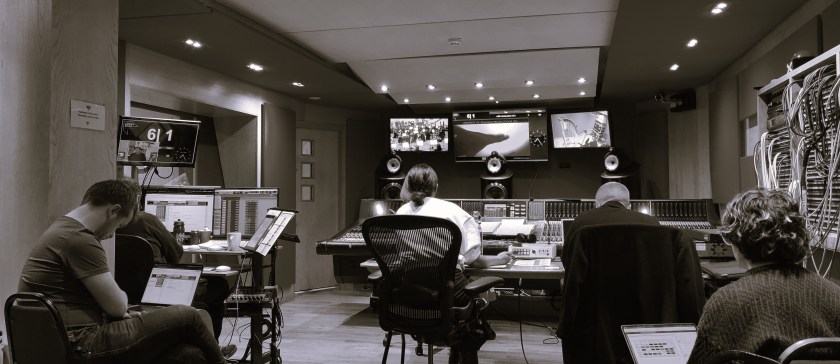
Looking back, I realised that witnessing Arete is one of my favourite things in life: when I saw my friend, composer Raphaelle Thibaut, record at Abbey Road Studios, and snapped this picture to remember how it felt to see her there, the boss in the room, years after she suddenly quit her job at Google because she just had to make music.

Even earlier this year in the middle of a session with Dina Grishin – the career coach who recently helped me – when I told her how happy I was that she had left her old job and decided to pursue coaching. It did not make me happy for her, mind you, or even for myself, who got to enjoy the fruit of her labour. It simply satisfied me tremendously to witness her do what she was obviously meant to do.

So there you go: look around you and take a little mental snapshot every time you notice Arete. Your barista who makes an excellent coffee. The notebook whose weight, texture and dimensions are just right. The teacher that all the kids in school love somehow. Yourself, as you feel in your chest that odd mix of rush and calm when you are in the flow, doing what you are meant to be doing.

In between weird nail art and outrage bait, the algorithm recently pushed me this video of Tom Waits reading Bukowski’s poem The Laughing Heart, which captures in so many words the essence of this indulgent digression, and is therefore probably the most elegant way to wrap it up.

Book Review – The Nix by Nathan Hill

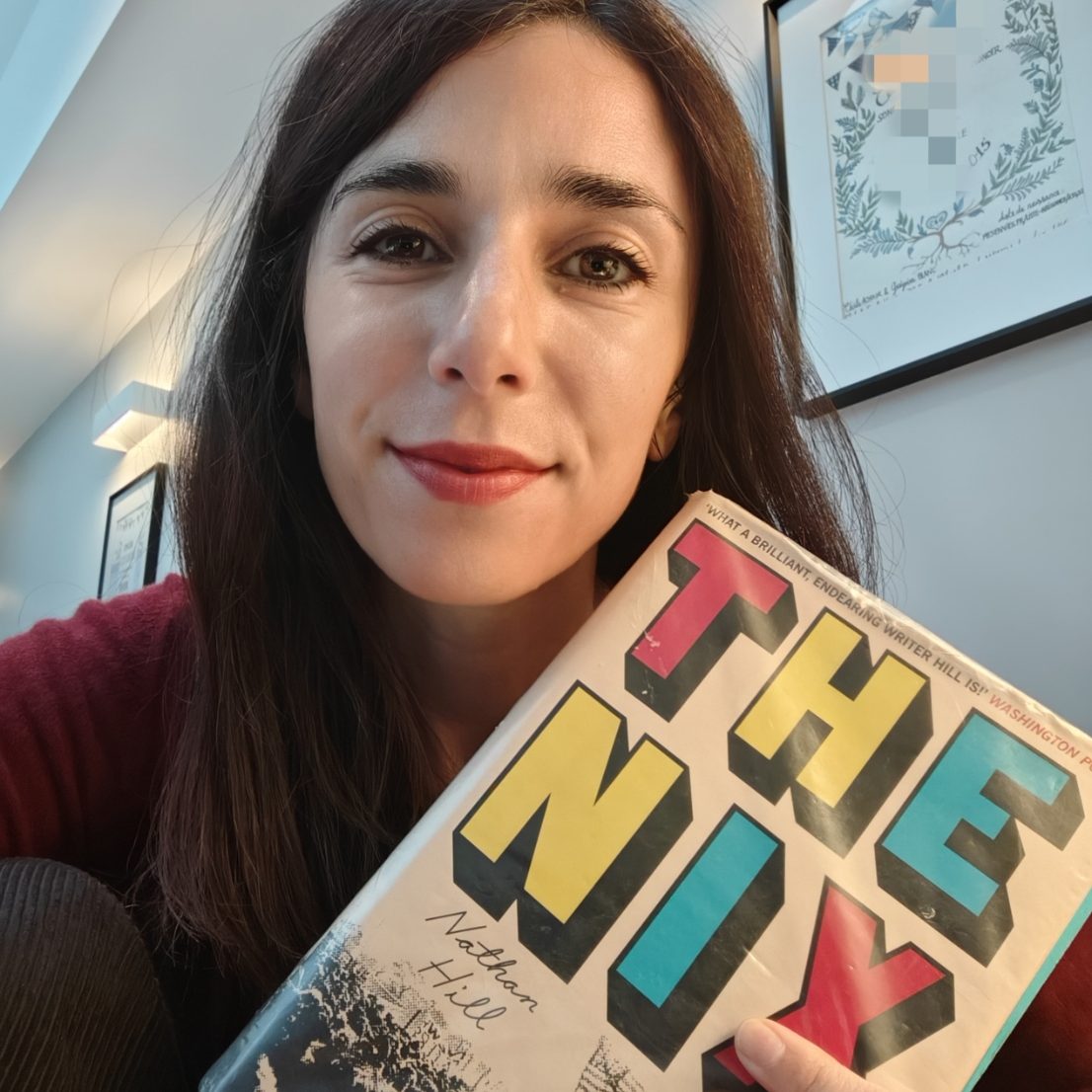
I ordered The Nix from my library after a friend recommended it this summer, and fell in love with the voice straight away: erudite and witty, with the best prologue I have read in a while, and a devastating first sentence:

If Samuel had known his mother was leaving, he might have paid more attention.

The prose in Nathan Hill’s impressive debut novel is sneaky. The language is delicious and reads easily. Humour softens us up. Then daggers are planted deep in our hearts.

As a mother of boys, I find the chronic misunderstanding between the main character Samuel and his mother triggering – and cried like a baby at the end of the first chapter of Part Two:

“And I told you to bring nine toys,” she said. “You brought eight. Next time try to pay more attention.” And the disappointment in her voice made him cry even harder, so that he couldn’t talk, and thus he couldn’t tell her that he put eight toys in the wagon because the ninth toy was the wagon itself.

The story starts when the mother becomes a viral sensation for throwing rocks at a presidential candidate, and the son she abandoned as a child is coerced by his publisher into writing a sensational ‘tell-all’ book about her. As he investigates her past, family secrets are unveiled and old wounds are healed.

It’s a book from a decade ago, but very relevant to today’s tired gender wars, where men and women are expected to keep competing in a never-ending zero sum game where the only winners are those who fan the flames of outrage for social media engagement – and even traditional publishers like The New York Times and The Guardian are taking the (click-)bait.

This makes reading Nathan Hill’s novel now all the more poignant, and imbues the turtle anecdote – which I can’t resist sharing here – with new meaning: perhaps we can emulate Samuel’s journey and build new bridges, rather than widening the gap generation after generation.

Years later, in a high-school biology class, Samuel heard a story about a certain kind of African turtle that swam across the ocean to lay its eggs in South America. Scientists could find no reason for the enormous trip. Why did the turtles do it? The leading theory was that they began doing it eons ago, when South America and Africa were still locked together. Back then, only a river might have separated the continents, and the turtles laid their eggs on the river’s far bank. But then the continents began drifting apart, and the river widened by about an inch per year, which would have been invisible to the turtles. So they kept going to the same spot, the far bank of the river, each generation swimming a tiny bit farther than the last one, and after a hundred million years of this, the river had become an ocean, and yet the turtles never noticed.

Book Review – Orbital by Samantha Harvey

In short: it seems to me that Booker 2024 winner Orbital started as an impactful short story and was inflated into a windy novel that sometimes struggles to fill its 136 pages.

The premise was powerful: an astronaut’s mother dies while she is stranded on the International Space Station. We follow her musings as she orbits in contemplative loops above continents and oceans.

They look down and they understand why it’s called Mother Earth. They all feel it from time to time. They all make an association between the earth and a mother, and this in turn makes them feel like children.

The treatment is ethereal and repetitive, which plays beautifully into the low gravity, orbital state of the ISS.

My main frustration is the same one I have with Malick’s Tree of Life. In the words of actor Sean Penn: “A clearer and more conventional narrative would have helped the film without, in my opinion, lessening its beauty and its impact.

Similarly, Orbital is full of beautiful imagery, and devoid of any plot.

I love all things ISS (the International Space Station). There is a Lego replica of it above my bed. Sometimes when my faith in humanity wobbles, I rewatch the 5min intro to the movie Valerian, showing the first Soviet and American stations joining up, followed by many others modules from around the world, to the sound of David Bowie’s Space Oddity. I was the perfect reader for this book, and yet found it laborious to finish.

What I liked

Harvey plays with the clichés of nurturing, cyclical womanhood and transcending, linear manhood, to subvert them. In many ways this book is the antithesis to Tom Wolfe’s The Right Stuff, which was all about manly manhood in space conquest.

The Earth here is often compared to a woman – not just a mother but a lover also, which traps these explorers into her orbit, hypnotises them…

You could abandon it all, just to look. You could never comprehend the stars, but the earth you could know in the way you know another person, in the way he came quite studiedly and determinedly to know his wife. With a yearning that’s hungry and selfish. He wishes to know it, inch by inch.

… and alienates them from their “natural” sun-centric cycle, to elevate them to an earth-centric, infinite loop where they will be bound to pause and reflect.

They cling to their twenty-four hour clock because it’s all the feeble little time-bound body knows – sleep and bowels and all that is leashed to it. But the mind goes free within the first week.

This opposition between harsh “nature” and elevated “grace” is also at the heart of The Tree of Life, personified respectively by the father and the mother.

But Harvey subvert these tropes. She puts the following words in the mouth of a man:

Man’s hubris. A hubris so almighty it’s matched only by its stupidity. And these phallic ships thrust into space are surely the most hubristic of them all, the totems of a species gone mad with self-love.

And these in the mouth of a woman:

He asked her then if she’d ever go to Mars, knowing the journey would be at least three years and that she might never come back. Yes, she’d answered without a moment’s hesitation, and it was hard for her to understand why anyone would choose otherwise.

Harvey makes this duality – nature vs grace, alpha vs omega, yearning vs contentment, exploration vs contemplation – a tension that lives within us all, rather than a man vs woman dichotomy, which I found well done and refreshing.

What I didn’t like

As mentioned above, beyond the initial idea of one of the astronaut losing her mother while being on the ISS, the narrative threads from the other astronauts/cosmonauts felt flimsy.

In particular, the friendship between one of the astronauts and a Filipino fisherman felt to me like the kind of material you’d see in an advert for an energy company, with a gently non-comital baseline like “For all humanity”.

It could have been done in a fresh and believable way but was instead full of clichés of first-world / third-world embrace. This sentence in particular was frankly uncomfortable to read:

What of the Filipino children he and his wife met on their honeymoon, the fisherman’s children? Their easy toothy grins, the scuffed rough knees and silken skin, their vests and flip-flops and dirty toes, their sing-song chatter, the bottomless brown of their lovely eyes (…)

The paragraph continues in the same vein, mentioning the astronaut’s “nice-smelling” wife. Close to the end of the book, this sentence shattered for me any attempt at universality, and left a bad taste in my mouth.

In summary

It was still a nice read. I would recommend finding a moment to read it all in one go (it is only 136 pages), as the lack of plot gives little impetus to return to it if you pause.

It is a Booker winner for a reason. Some of the language, especially when painting our blue planet, is sublime.

There is a tiny random sentence I keep thinking about:

The Nile is a spillage of royal-blue ink.

It seems to me like a little “wink” from the god-like, world-building writer, unwittingly spilling ink on her beloved creation, creating happy accidents that are sometimes meaningless, but beautiful nonetheless.